

Comparison
NOCO GB150 vs GBX155
Boost PRO vs Boost X for Large Engines
NOCO rates the GB150 (3000A peak) for gas up to 9.0 liters and diesel up to 7.0 liters; the GBX155 (4250A peak) for gas up to 10 liters and diesel up to 8.0 liters. Every difference that matters.
By thisJOLT EditorialUpdated November 17, 20266 min read2 picks
On this page · The short answer
The short answer
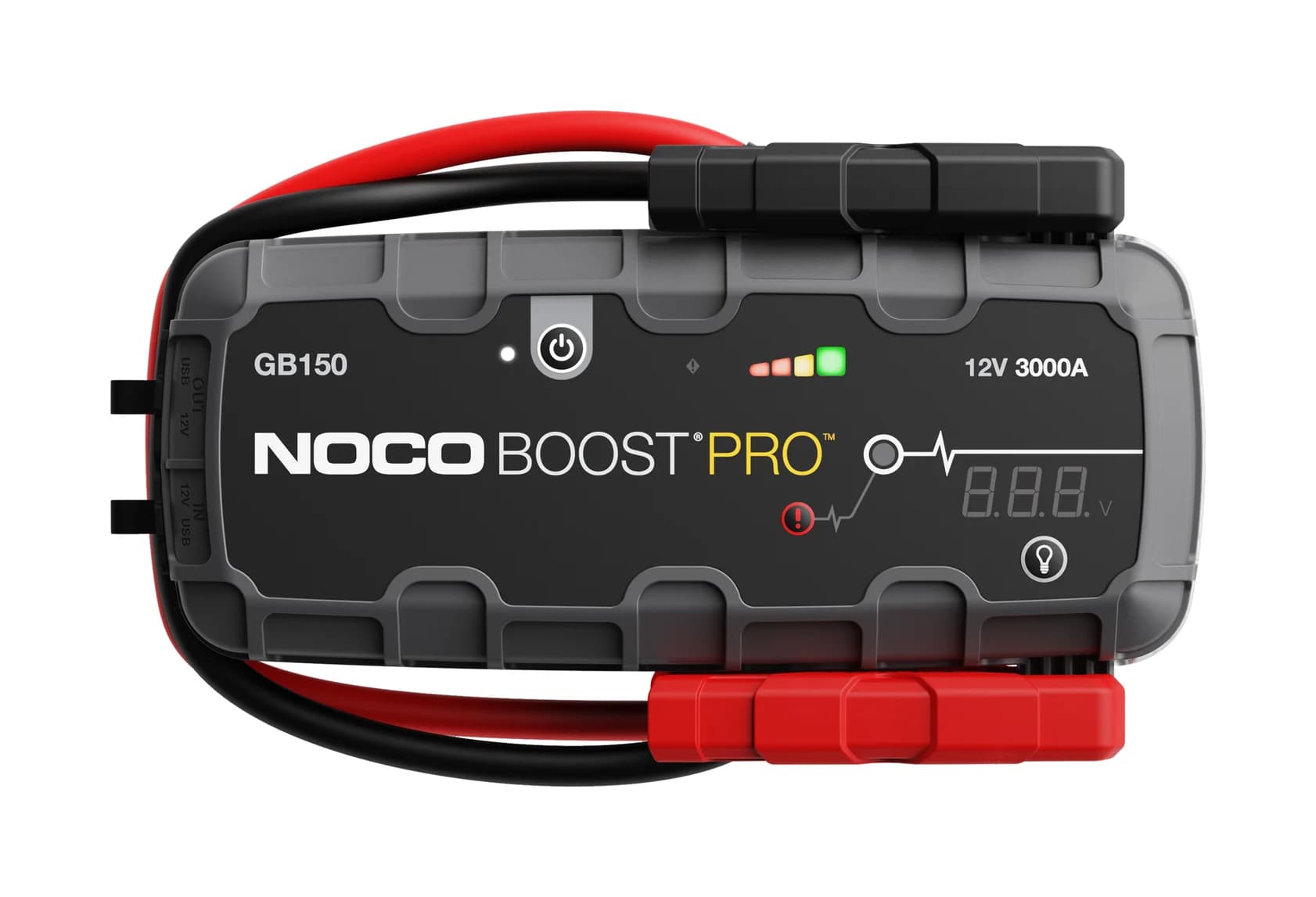
NOCO · GB150
NOCO 3000A Lithium
- Gas engine rating (maker's words)
- Up to 9.0 Liters
- Diesel engine rating (maker's words)
- Up to 7.0 Liters
- Starting rating, as labeled
- Starting Current: 3000 Amps
- (Peak)
- Choose
- Best for owners with engines the GB150's ratings cover
- Check
- Does not state a cranking-amp figure; only peak-amp rating is published
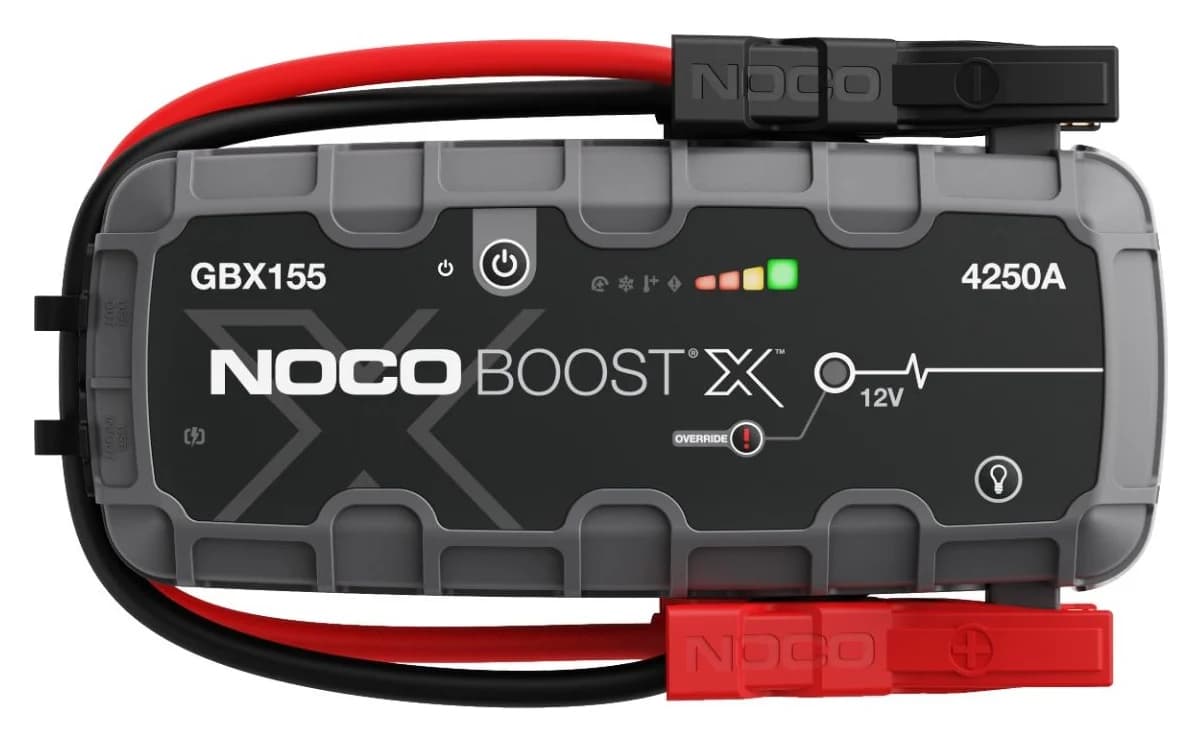
NOCO · GBX155
NOCO 4250A Lithium
- Gas engine rating (maker's words)
- Up to 10 Liters
- Diesel engine rating (maker's words)
- Up to 8.0 Liters
- Starting rating, as labeled
- Starting Current: 4250 Amps
- (Peak)
- Choose
- Best for owners with engines the GBX155's ratings cover
- Check
- Starts-per-charge figure not published by NOCO
How much does each one weigh?
Published weights, drawn to scale from zero. Weight says nothing about starting power.
Warnings and sources
Jump starters, battery chargers and compressors involve high current, battery gases, heat and pressure. Follow the maker’s manual for the exact model and your vehicle’s owner’s manual; this guide summarizes published specifications and is not a set of instructions.
Both NOCO jump starters in this comparison handle the same 12 Volt lead-acid batteries and share NOCO's spark-proof, reverse polarity protection design with IP65 protection. The decision between them comes down to engine size and charging speed: NOCO rates the GB150 Boost PRO for gas engines up to 9.0 liters and diesel up to 7.0 liters, while the GBX155 Boost X is rated for gas engines up to 10 liters and diesel up to 8.0 liters. Both carry the same 1-year warranty and use a lithium-ion internal battery. If your engine falls within the GB150's stated range and you want the XGC 12 Volt accessory output, the GB150 is the fit. If you need the higher rating or faster USB-C recharging, the GBX155 is the one.
For more on what separates these from lead-acid boxes, see our lithium-ion vs lead-acid jump starter comparison. For a wider field of lithium packs, see the portable jump starters for cars roundup.
What stays the same on both
Both units share a lithium-ion internal battery, 12 Volt lead-acid battery compatibility, an IP65 enclosure (with ports closed), spark-proof and reverse polarity protection, a 500-lumen LED flashlight with multiple modes including SOS and emergency strobe, and a 1 Year Hassle-Free Warranty. NOCO states the GBX155 uses its spark-proof design and reverse polarity protection, with the GBX155 adding enhanced thermal efficiency and power management (NOCO describes the difference as an improvement on the standard system used by the GB150). Both are single-unit packs with no separate battery pack to carry, and neither spec table lists any voltage above the 12 Volt platform. The IP65 rating and warranty are listed in each model's spec table, not on the overview page.
- Yes: 12 Volt lead-acid battery compatibility on both
- Yes: IP65 (w/ Ports Closed) on both
- Yes: Spark-proof and reverse polarity protection on both
- Yes: 500-Lumen LED flashlight on both
- Yes: 1 Year Hassle-Free Warranty on both
- Yes: Lithium-Ion internal battery on both
- No: Neither spec table lists any voltage above the 12 Volt platform
- No: Neither names a clamp cable length or gauge
- No: Neither names an Amazon listing on NOCO's own pages
What differs, in NOCO's own words
Starting current (NOCO's label)
- GB150 (Boost PRO)
- 3000 Amps (Peak)
- GBX155 (Boost X)
- 4250 Amps (Peak)
Gas engine rating
- GB150 (Boost PRO)
- Up to 9.0 Liters
- GBX155 (Boost X)
- Up to 10 Liters
Diesel engine rating
- GB150 (Boost PRO)
- Up to 7.0 Liters
- GBX155 (Boost X)
- Up to 8.0 Liters
Internal battery
- GB150 (Boost PRO)
- 88 Watt-Hour Lithium-Ion
- GBX155 (Boost X)
- 99 Watt-Hour Lithium-Ion
USB input
- GB150 (Boost PRO)
- USB-C: 5 Volts 2.1 Amps Max
- GBX155 (Boost X)
- USB-C: 5 Volts 1.5 Amps / 9 Volts 3 Amps / 12 Volts 3 Amps / 15 Volts 3 Amps / 20 Volts 3 Amps
USB output
- GB150 (Boost PRO)
- 5 Volts 2.1 Amps Max (port type not named)
- GBX155 (Boost X)
- USB-A: 5 Volts 2.1 Amps / 10 Watts; USB-C: 5 Volts 3 Amps to 20 Volts 3 Amps (60 Watts)
12 Volt accessory output
- GB150 (Boost PRO)
- XGC Output: 12 Volts, 15 Amp
- GBX155 (Boost X)
- Not listed
Recharge time
- GB150 (Boost PRO)
- 3 Hour Recharge via XGC (5 Amp); USB-C not stated
- GBX155 (Boost X)
- 2.7 hours via USB-C (60 Watts)
Jump starts per charge
- GB150 (Boost PRO)
- UP TO 80 JUMP STARTS (NOCO copy)
- GBX155 (Boost X)
- Not stated
Jump-start timeout
- GB150 (Boost PRO)
- Not stated
- GBX155 (Boost X)
- NOCO states 60-second window; power cycle required to reset
Weight (spec table)
- GB150 (Boost PRO)
- 6.39 lbs (2.9 kg)
- GBX155 (Boost X)
- 5.82 lbs (2.64 kg)
In the box
- GB150 (Boost PRO)
- GB150 unit, XGC adapters and cable, USB-C cable, storage bag
- GBX155 (Boost X)
- GBX155 unit, Integrated HD Precision Clamps, 24in USB-C cable, 24in 12 Volt to USB-C cable, storage bag
Warranty
- GB150 (Boost PRO)
- 1 Year Hassle-Free Warranty
- GBX155 (Boost X)
- 1 Year Hassle-Free Warranty
Full comparison table
Swipe to compare. Row labels stay visible.
| Spec | GB150 (Boost PRO) | GBX155 (Boost X) |
|---|---|---|
| Starting current (NOCO's label) | 3000 Amps (Peak) | 4250 Amps (Peak) |
| Gas engine rating | Up to 9.0 Liters | Up to 10 Liters |
| Diesel engine rating | Up to 7.0 Liters | Up to 8.0 Liters |
| Internal battery | 88 Watt-Hour Lithium-Ion | 99 Watt-Hour Lithium-Ion |
| USB input | USB-C: 5 Volts 2.1 Amps Max | USB-C: 5 Volts 1.5 Amps / 9 Volts 3 Amps / 12 Volts 3 Amps / 15 Volts 3 Amps / 20 Volts 3 Amps |
| USB output | 5 Volts 2.1 Amps Max (port type not named) | USB-A: 5 Volts 2.1 Amps / 10 Watts; USB-C: 5 Volts 3 Amps to 20 Volts 3 Amps (60 Watts) |
| 12 Volt accessory output | XGC Output: 12 Volts, 15 Amp | Not listed |
| Recharge time | 3 Hour Recharge via XGC (5 Amp); USB-C not stated | 2.7 hours via USB-C (60 Watts) |
| Jump starts per charge | UP TO 80 JUMP STARTS (NOCO copy) | Not stated |
| Jump-start timeout | Not stated | NOCO states 60-second window; power cycle required to reset |
| Weight (spec table) | 6.39 lbs (2.9 kg) | 5.82 lbs (2.64 kg) |
| In the box | GB150 unit, XGC adapters and cable, USB-C cable, storage bag | GBX155 unit, Integrated HD Precision Clamps, 24in USB-C cable, 24in 12 Volt to USB-C cable, storage bag |
| Warranty | 1 Year Hassle-Free Warranty | 1 Year Hassle-Free Warranty |
Scroll horizontally to see every column
| Spec | GB150 (Boost PRO) | GBX155 (Boost X) |
|---|---|---|
| Starting current (NOCO's label) | 3000 Amps (Peak) | 4250 Amps (Peak) |
| Gas engine rating | Up to 9.0 Liters | Up to 10 Liters |
| Diesel engine rating | Up to 7.0 Liters | Up to 8.0 Liters |
| Internal battery | 88 Watt-Hour Lithium-Ion | 99 Watt-Hour Lithium-Ion |
| USB input | USB-C: 5 Volts 2.1 Amps Max | USB-C: 5 Volts 1.5 Amps / 9 Volts 3 Amps / 12 Volts 3 Amps / 15 Volts 3 Amps / 20 Volts 3 Amps |
| USB output | 5 Volts 2.1 Amps Max (port type not named) | USB-A: 5 Volts 2.1 Amps / 10 Watts; USB-C: 5 Volts 3 Amps to 20 Volts 3 Amps (60 Watts) |
| 12 Volt accessory output | XGC Output: 12 Volts, 15 Amp | Not listed |
| Recharge time | 3 Hour Recharge via XGC (5 Amp); USB-C not stated | 2.7 hours via USB-C (60 Watts) |
| Jump starts per charge | UP TO 80 JUMP STARTS (NOCO copy) | Not stated |
| Jump-start timeout | Not stated | NOCO states 60-second window; power cycle required to reset |
| Weight (spec table) | 6.39 lbs (2.9 kg) | 5.82 lbs (2.64 kg) |
| In the box | GB150 unit, XGC adapters and cable, USB-C cable, storage bag | GBX155 unit, Integrated HD Precision Clamps, 24in USB-C cable, 24in 12 Volt to USB-C cable, storage bag |
| Warranty | 1 Year Hassle-Free Warranty | 1 Year Hassle-Free Warranty |
All figures from NOCO's spec tables and product pages.
- 3000 Amps (Peak)GB150 starting current, per NOCO's spec table
- 4250 Amps (Peak)GBX155 starting current, per NOCO's spec table
- 9.0 LitersGB150 gas engine rating, per NOCO
- 10 LitersGBX155 gas engine rating, per NOCO
- 5.82 lbsGBX155 weight (spec table) — lighter than the GB150
- 60 WattsGBX155 USB-C Power Delivery in and out
Best for owners with engines the GB150's ratings cover: NOCO GB150
The GB150 is the right call when your engine falls within its stated range and you want a portable unit for gas up to 9.0 liters or diesel up to 7.0 liters. Those figures come from NOCO's spec table, and they cover most half-ton and three-quarter-ton diesel pickups. The included XGC 12 Volt output at 15 Amp is a practical extra: it powers 12V accessories like tire inflators or power inverters without needing the vehicle's own outlet. NOCO's marketing copy also claims up to 80 jump starts per charge, though that figure carries no stated conditions. The spec table weight of 6.39 lbs is the figure to use; NOCO's marketing overview separately says 7.5 pounds.
The USB input tops out at 5 Volts 2.1 Amps per the spec table, and recharge is listed at a 3-hour window via the XGC 12 Volt input. That is slower than the GBX155's 60 Watt USB-C option, and if fast recharging between uses matters, that gap is real.
What the GB150 has that the GBX155 does not: the XGC 12 Volt accessory output and a stated jump-starts-per-charge claim. Whether those matter depends on how you use the pack.
Best for owners with engines the GBX155's ratings cover: NOCO GBX155
The GBX155 is the right call when your engine needs the next rung up: gas engines up to 10 liters and diesel up to 8.0 liters, per NOCO. That extra liter on gas and liter on diesel puts the GBX155 within range for some heavy-duty diesel pickups that the GB150's rating excludes. It is also the lighter unit at 5.82 lbs per the spec table, versus 6.39 lbs for the GB150.
The headline feature beyond the engine rating is the 60 Watt USB-C Power Delivery: NOCO states a 2.7-hour full recharge, and its own copy claims 5 minutes of charge is enough to go from 0% to jump-starting the vehicle. The USB-C port handles input and output, which makes it a faster recharge than the GB150 and a more capable power bank for 60 Watts devices. NOCO names both the USB-A and USB-C output ports in the spec table, whereas the GB150's USB output type is not named.
One thing to note from NOCO's own operating note on the GBX155 page: the vehicle must be started within 60 seconds of pressing the Boost button, and after that timeout the unit requires a power cycle to initiate a new jump-start sequence. The GB150 spec table does not state this limitation. Both warnings belong here so you know what NOCO itself says about each unit.
How we choose
We compare products on their makers' published specifications, not on physical testing we have not done. Every figure above comes from NOCO's product pages and spec tables at no.co. Where NOCO's marketing overview and spec table disagree — as with the GB150's weight, 6.39 lbs in the table versus 7.5 pounds in the overview — we use the spec table figure and note the discrepancy. The engine rating NOCO prints in its own words is the comparison this page is built around, not the peak amp difference between the two units.
Verdict
Choose the GB150 when your gas or diesel engine is within 9.0 liters and 7.0 liters respectively, and when the XGC 12 Volt output or a stated jump-starts-per-charge figure matters to you. Choose the GBX155 when you need gas up to 10 liters or diesel up to 8.0 liters, when fast recharge via 60 Watt USB-C is a priority, or when carrying less weight is worth the trade-off. The engine rating in NOCO's own words is the decision point — not the peak amp difference. Run your engine size against our lithium jump starter roundup if you want to see how these compare to other brands.
Frequently asked questions
What is the difference between NOCO Boost PRO (GB150) and Boost X (GBX155)?
The Boost PRO line (GB150) and Boost X line (GBX155) are separate product families. The Boost X GBX155 carries newer PX Lithium Technology, starts at a higher peak rating (4250A vs 3000A), and adds 60 Watt USB-C Power Delivery for fast recharging. Both carry spark-proof design and reverse polarity protection, with the GBX155 adding enhanced thermal efficiency and power management. NOCO states both the IP65 rating and 1-year warranty on each model's spec page, not the overview page. Neither is a direct replacement or upgrade of the other; each has its own engine rating.
Which jump starter handles the bigger engine?
The GBX155 covers more. NOCO rates the GBX155 for gas engines up to 10 liters and diesel up to 8.0 liters, versus the GB150's gas up to 9.0 liters and diesel up to 7.0 liters. The extra liter of gas and liter of diesel coverage is the deciding factor for heavy-duty and diesel pickup owners. Both figures come from NOCO's own spec tables.
Does more peak amps mean the GBX155 is the better choice?
Not necessarily. NOCO lists peak amps on both spec tables (3000A for the GB150, 4250A for the GBX155), but peak amps alone do not tell you which unit is right for your vehicle. The engine rating NOCO prints for each model is the comparison that matters: it ties the unit's output to an engine size. If your engine is within the GB150's stated 9.0 liters gas and 7.0 liters diesel range, the extra peak amps of the GBX155 are not the reason to pay more for it.
How long does each unit take to recharge?
NOCO states the GBX155 fully recharges in 2.7 hours via its 60 Watt USB-C input. The GB150 spec table lists an XGC 12 Volt input of 5 Amp Fast Charge with a 3 Hour Recharge time, and a USB-C input of 5 Volts 2.1 Amps Max. NOCO's own copy for the GBX155 says 'it is possible to charge up to 5X faster' than the GB150, with the qualifier applying to the 60W USB-C charger against the GB150's 5 Volts 2.1 Amps USB-C input. Both figures come from NOCO's pages; the comparison holds only for the two models listed here.
Can I use either jump starter as a power bank?
Both have USB outputs for charging phones and other devices. The GB150 spec table lists a USB output of 5 Volts 2.1 Amps Max without naming the port type, plus an XGC 12 Volt output at 15 Amp. The GBX155 names both ports: a USB-A at 5 Volts 2.1 Amps (10 Watts) and a USB-C at up to 20 Volts 3 Amps (60 Watts). Neither is marketed as a power bank, and their Wh capacity is sized for jump starting, not device charging as a primary use. NOCO lists no mAh or Wh-per-charge figure for either model.
Is the 60-second jump-start timeout on the GBX155 a problem?
NOCO states on the GBX155 product page that you must start the vehicle within 60 seconds of pressing the Boost button, and that after the timeout the unit must be powered off and back on to initiate a new jump-start sequence. The GB150's own spec table does not state this limitation, which makes it worth noting if you need to attempt a longer crank. Read your model's manual for the exact crank time and rest interval before connecting.
What comes in each box?
The GB150 includes the GB150 unit, an XGC 12 Volt Male Adapter, XGC 12 Volt Female Adapter, an XGC Extension Cable, a USB-C to USB-C cable, and a Microfiber Storage Bag. The GBX155 includes the GBX155 unit, Integrated HD Precision Battery Clamps, a 24in USB-C to USB-C cable, a 24in 12 Volt to USB-C cable, and a Microfiber Storage Bag. Neither listing names a cable length or gauge for the clamp leads. NOCO states no Amazon Buy Now link on its own product pages.

Related guides
Best picks · Jump Starters
Lithium-Ion vs Lead-Acid Jump Starters: Which Type Suits Your Vehicle
Lithium-ion vs lead-acid jump starters: compare weight, cable reach, recharging, storage temperatures and maker warnings across seven models.
Best picks · Jump Starters
Portable Jump Starters for Cars in 2026: Picked by the Engine Sizes Their Makers Name
Portable jump starters grouped by engine sizes their manufacturers quote for gas and diesel.
Comparison · Jump Starters
NOCO GB40 vs GB70: Which Boost Jump Starter Matches Your Engine
NOCO rates the GB40 for gas up to 6.0 liters and diesel up to 3.0 liters, while the GB70 handles gas up to 8.0 liters and diesel up to 6.0 liters. Here's how to pick the right one.