

Comparison
VIAIR 88P vs 400P: Duty Cycle, Airflow and Tire Size Compared
The 88P runs 25 minutes at 30 PSI; the 400P EF runs 100% at 40 PSI and 33% at 100 PSI. Here is every maker-stated difference between them.
By thisJOLT EditorialUpdated November 17, 20268 min read2 picks
On this page · The short answer
The short answer
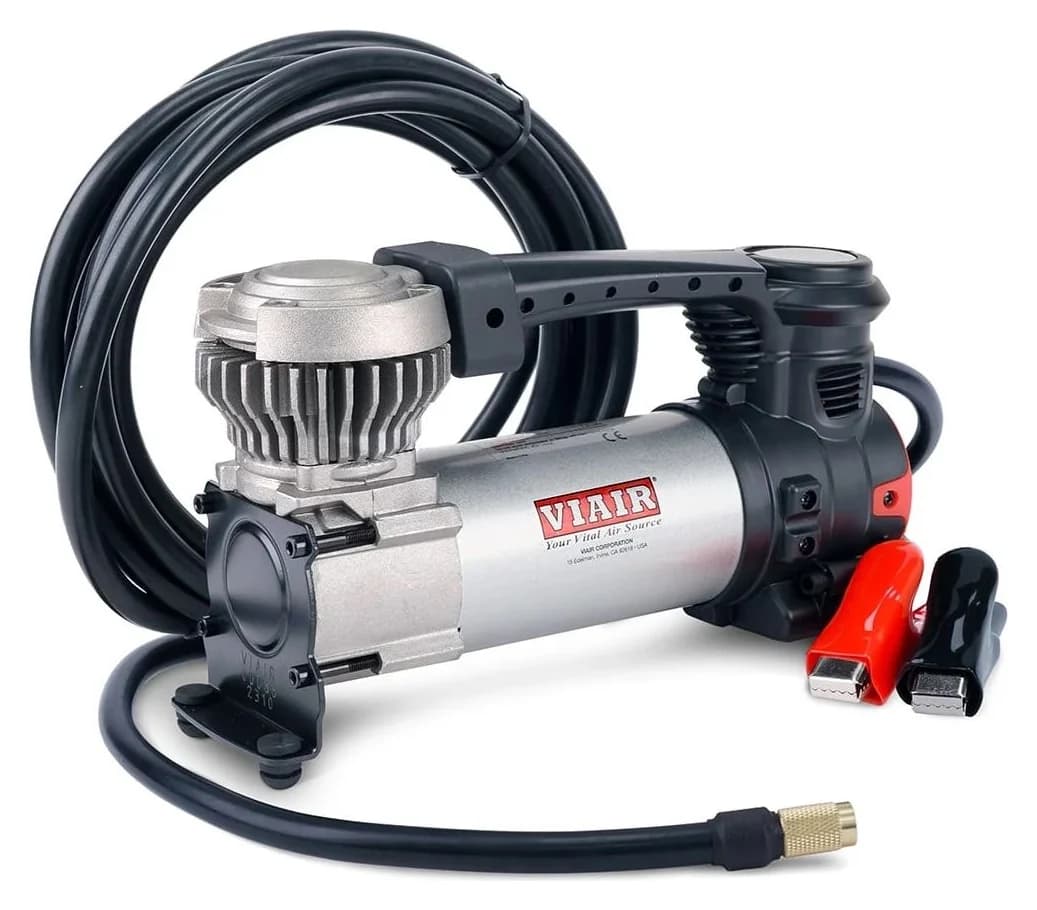
VIAIR · 00088
Every Vehicle Carry® 88P Portable Compressor
- Power source and connection
- Battery clamps
- Duty cycle (maker's wording)
- 25 min. @ 30 PSI
- Airflow, with unit and test pressure
- 1.97 CFM @ 0 PSI
- Choose
- Best for drivers with 33-inch and smaller tires
- Check
- No preset shutoff or digital display; an analog gauge requires manual monitoring
In the box: Compressor, Inflation Tips Kit, Carry Bag
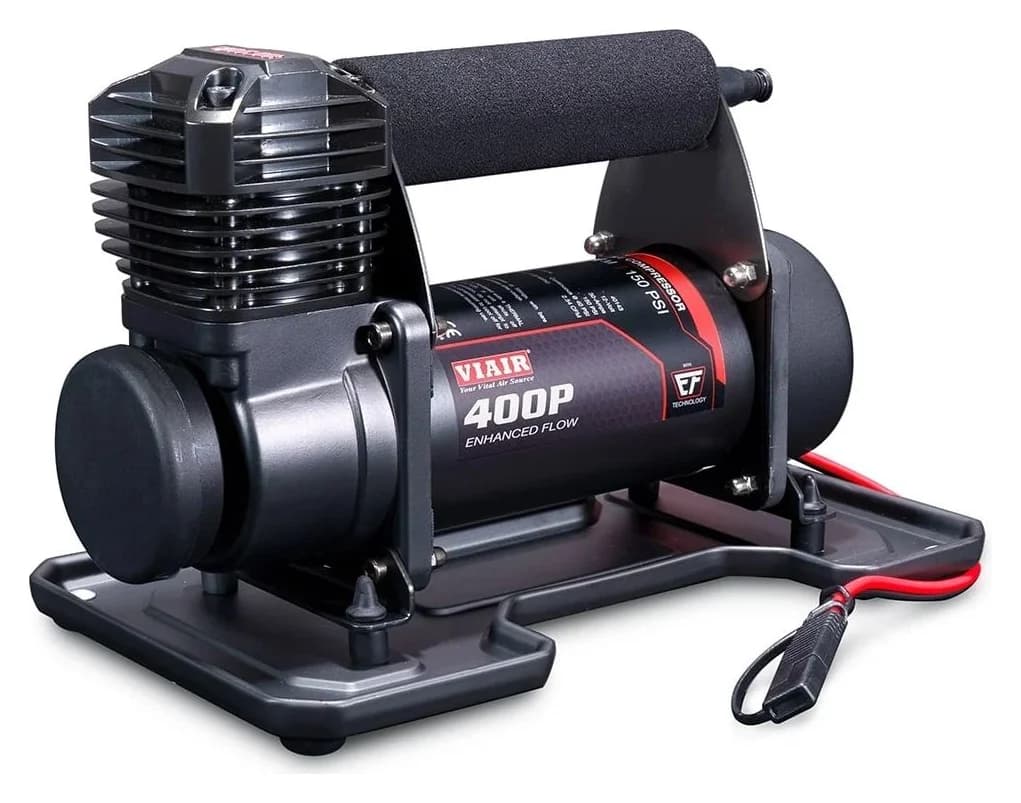
VIAIR · 40143
VIAIR 400P EF Portable Compressor
- Duty cycle (maker's wording)
- 100% @ 40 PSI - 33% @100 PSI
- Maximum pressure (maker)
- 150 psi
- Maximum current draw (maker)
- 30 A
- Choose
- Best for oversize tires and extended runs
- Check
- Duty cycle 100% @ 40 PSI applies only at that pressure; VIAIR rates 33% @ 100 PSI, so the unit rests between sessions at high pressure
In the box: Compressor, SAE Power Connects, Coil Hose, Inflation Tips Kit, Carry Bag
Compare the picks
| Specification | #1 Every Vehicle Carry® 88P Portable Compressor | #2 VIAIR 400P EF Portable Compressor |
|---|---|---|
| Maximum pressure (maker) | 120 psi | 150 psi |
| Duty cycle (maker's wording) | 25 min. @ 30 PSI | 100% @ 40 PSI - 33% @100 PSI |
| Power source and connection | Battery clamps | 2-Pin SAE Power connection with 40-Amp inline fuse holder |
| Maximum current draw (maker) | 20 A | 30 A |
| Air hose and power cord length | Power cord: 10 ft; Air hose: 16 ft | Power cord: 6 ft; Air hose: 25 ft |
| Enclosure rating (IP code) | IP53 | IP54 |
| Operating and charging temperatures (maker) | Min. Ambient Temp: -4°F; Max. Ambient Temp: +158°F | Min. Ambient Temp: -40°F; Max. Ambient Temp: 158°F |
| Weight | 4.75 lb | 10.35 lb |
| Best for | Off-road & overlanding, RVs & trailers, Daily drivers | Off-road & overlanding, RVs & trailers, Diesel pickups & big V8s |
| Buy | Find on Amazon | Find on Amazon |
Warnings and sources
Jump starters, battery chargers and compressors involve high current, battery gases, heat and pressure. Follow the maker’s manual for the exact model and your vehicle’s owner’s manual; this guide summarizes published specifications and is not a set of instructions.
The VIAIR 88P (part 00088) and the 400P EF (part 40143) are both 12V portable air compressors that clamp to the vehicle battery, but they answer different questions. The 88P is a medium-duty inflator built for drivers with everyday tires and occasional trail use; the 400P EF is a heavy-duty unit built for oversized tires and extended runs. The deciding factors are duty cycle, maximum PSI and how much current each draw requires from your vehicle's electrical system.
- 120 PSIMaximum working pressure on the 88P, per VIAIR
- 150 PSIMaximum working pressure on the 400P EF, per VIAIR
- 25 min. @ 30 PSIDuty cycle of the 88P, per VIAIR
- 100% @ 40 PSI - 33% @ 100 PSIDuty cycle of the 400P EF, per VIAIR
What is the same on both
Both compressors come from VIAIR, share the same 12V permanent magnetic motor design, and carry an IP rating. Both are built for off-road and roadside use and ship with a carry bag and inflation tip kit. Neither has a preset pressure or auto-shutoff stated on the product page. Both require more current than a standard 12V outlet socket can supply: the 88P draws up to 20A and the 400P EF draws up to 30A, and VIAIR warns to check the vehicle's power port rating before ordering. Both are aimed at off-road, overland and RV users.
What differs, in VIAIR's own words
The 88P product page says the compressor "can handle tires up to 33-inch." The 400P EF page describes it as having "High Flow output for Oversize Tires" — it names no specific size, and VIAIR's comparison chart shows the older 400P / 12V (part 40043) at 35″, which does not apply to the 40143.
On pressure: the 88P reaches a maximum of 120 PSI; the 400P EF reaches 150 PSI. On duty cycle: the 88P is rated 25 minutes at 30 PSI. The 400P EF is rated 100% at 40 PSI — meaning continuous operation at typical inflation pressure — and drops to 33% at 100 PSI.
On current draw: the 88P draws up to 20A; the 400P EF draws up to 30A. On weight: the 88P is 4.75 lbs. and the 400P EF is 10.35 lbs.
On the air hose: the 88P ships with a 16-foot air hose and an analog 120 PSI pressure gauge. The 400P EF ships with a 5-in-1 Inflator/Deflator Air Hose with an inline 100 PSI gauge, a 25-foot reach, and an EF head that VIAIR says improves heat dissipation.
On airflow: VIAIR states no CFM for the 400P EF. For the 88P, two figures appear on VIAIR's own pages. The product page says "CFM: 1.97 @ 0 PSI" and the comparison chart lists "1.47" at the same 0 PSI test pressure.
On power connection: the 88P uses dual battery clamps. The 400P EF uses a 2-pin SAE power connection with a 40-Amp inline fuse holder; VIAIR sells a 7-Way Power Access adapter for vehicles with a trailer plug.
Spec comparison table
VIAIR 88P (00088)
- Max. Working Pressure
- 120 PSI
- Airflow (product page)
- CFM: 1.97 @ 0 PSI
- Airflow (comparison chart)
- 1.47 CFM @ 0 PSI
All specifications
- Duty Cycle
- 25 min. @ 30 PSI
- Max. Amp Draw
- 20 A
- Max. Tire Size
- 33-inch (per product page)
- Power Source
- Dual Battery Clamps
- Power Cord Length
- 10 ft.
- Air Hose Length
- 16 ft.
- Gauge
- 120 PSI analog
- IP Rating
- IP53
- Operating Temp Range
- -4°F to 158°F
- Weight
- 4.75 lbs.
- Noise
- 81 decibels @ 0 PSI
VIAIR 400P EF (40143)
- Max. Working Pressure
- 150 PSI
- Airflow (product page)
- Not stated
- Airflow (comparison chart)
- Not comparable to 40143
All specifications
- Duty Cycle
- 100% @ 40 PSI - 33% @ 100 PSI
- Max. Amp Draw
- 30 A
- Max. Tire Size
- Not stated (chart shows 35" for different 400P model)
- Power Source
- 2-Pin SAE with 40 amp inline fuse
- Power Cord Length
- 6 ft.
- Air Hose Length
- 25 ft.
- Gauge
- 5-in-1 hose with inline 100 PSI gauge
- IP Rating
- IP54
- Operating Temp Range
- -40°F to 158°F
- Weight
- 10.35 lbs.
- Noise
- 73 decibels @ 0 PSI
Full comparison table
Swipe to compare. Row labels stay visible.
| Specification | VIAIR 88P (00088) | VIAIR 400P EF (40143) |
|---|---|---|
| Max. Working Pressure | 120 PSI | 150 PSI |
| Airflow (product page) | CFM: 1.97 @ 0 PSI | Not stated |
| Airflow (comparison chart) | 1.47 CFM @ 0 PSI | Not comparable to 40143 |
| Duty Cycle | 25 min. @ 30 PSI | 100% @ 40 PSI - 33% @ 100 PSI |
| Max. Amp Draw | 20 A | 30 A |
| Max. Tire Size | 33-inch (per product page) | Not stated (chart shows 35" for different 400P model) |
| Power Source | Dual Battery Clamps | 2-Pin SAE with 40 amp inline fuse |
| Power Cord Length | 10 ft. | 6 ft. |
| Air Hose Length | 16 ft. | 25 ft. |
| Gauge | 120 PSI analog | 5-in-1 hose with inline 100 PSI gauge |
| IP Rating | IP53 | IP54 |
| Operating Temp Range | -4°F to 158°F | -40°F to 158°F |
| Weight | 4.75 lbs. | 10.35 lbs. |
| Noise | 81 decibels @ 0 PSI | 73 decibels @ 0 PSI |
Scroll horizontally to see every column
| Specification | VIAIR 88P (00088) | VIAIR 400P EF (40143) |
|---|---|---|
| Max. Working Pressure | 120 PSI | 150 PSI |
| Airflow (product page) | CFM: 1.97 @ 0 PSI | Not stated |
| Airflow (comparison chart) | 1.47 CFM @ 0 PSI | Not comparable to 40143 |
| Duty Cycle | 25 min. @ 30 PSI | 100% @ 40 PSI - 33% @ 100 PSI |
| Max. Amp Draw | 20 A | 30 A |
| Max. Tire Size | 33-inch (per product page) | Not stated (chart shows 35" for different 400P model) |
| Power Source | Dual Battery Clamps | 2-Pin SAE with 40 amp inline fuse |
| Power Cord Length | 10 ft. | 6 ft. |
| Air Hose Length | 16 ft. | 25 ft. |
| Gauge | 120 PSI analog | 5-in-1 hose with inline 100 PSI gauge |
| IP Rating | IP53 | IP54 |
| Operating Temp Range | -4°F to 158°F | -40°F to 158°F |
| Weight | 4.75 lbs. | 10.35 lbs. |
| Noise | 81 decibels @ 0 PSI | 73 decibels @ 0 PSI |
Best for drivers with 33-inch and smaller tires: VIAIR 88P (00088)
The 88P is VIAIR's most popular medium-duty tire inflator, designed for vehicles with tires up to 33-inch. Its dual battery clamps connect directly to the vehicle battery at 13.8 volts, which is above the limits of most 12V outlet sockets and is what gives it the current it needs to reach 120 PSI. At up to 20A it works with most vehicle electrical systems without upgrading the outlet or wiring.
Its 25-minute duty cycle at 30 PSI is meaningful in context: most tire inflations take a few minutes per tire, so a set of four is well within that window. The duty cycle matters more when airing down for a trail and re-inflating afterward, or when airing up several vehicles. The 88P needs a rest between those jobs.
Two airflow figures appear on VIAIR's own pages for this model: "CFM: 1.97 @ 0 PSI" on the product page and 1.47 in the comparison chart, both measured at 0 PSI free flow. Free-flow CFM at 0 PSI is not the same as flow at tire pressure, and neither figure predicts fill time directly. Both are recorded here with the source page each came from.
The analog gauge reads to 120 PSI; VIAIR states no gauge accuracy spec. The product page notes "now available in an updated digital version" — this record covers the analog 00088, which has no stated preset or auto-shutoff. The 88P does not work with Presta bicycle valves unless used with the included Presta Valve Adaptor, and it does not work with the VIAIR Winterization Kit (P/N 90145).
Best for oversize tires and extended runs: VIAIR 400P EF (40143)
The 400P EF is VIAIR's updated version of the 400P with Enhanced Flow technology, a quick-connect SAE power system and a redesigned head for better heat dissipation. Its 150 PSI maximum working pressure handles high-pressure load-range tires that the 88P cannot reach. Its duty cycle, which VIAIR rates at 100% at 40 PSI against the 88P's 25 minutes at 30 PSI, is the critical difference for anyone who airs down and reinflates multiple tires in one session, or who uses the compressor to top up a heavy truck tire.
At 100 PSI VIAIR rates the duty cycle at 33%; its page does not state the time period behind that percentage, so it cannot be turned into minutes. The 30-amp draw is the practical limit: check whether your vehicle's battery circuit, auxiliary outlet or trailer connector can supply that current before buying.
The 400P EF product page states no CFM figure and no maximum tire size. The comparison chart lists the original 400P / 12V (part 40043, a different model) at 2.30 CFM @ 0 PSI and 35″ — do not carry those figures to the 40143. The EF page describes "High Flow output for Oversize Tires" without naming a size, and claims "up to 10% faster fill and 20% more performance" — an unverified marketing claim: no disclosed test methodology or comparison basis.
The 25-foot hose and SAE quick-connect power system give the 400P EF more reach and more flexibility in how it connects to a vehicle than the 88P's fixed clamps and shorter cables. The 5-in-1 hose deflates as well as inflates, useful for airing down before a trail. At 10.35 lbs. it is more than twice the weight of the 88P; it is built to stay in the truck, not to travel light.
Source: each maker's spec table
Which one for which buyer
Choose the 88P if your tires are 33-inch or smaller and you want the lighter, less expensive option that clips directly to the battery with no accessories. It is well within the 88P's stated limit for daily-driver and light off-road use, and its 20-amp draw works with most vehicle electrical systems.
Choose the 400P EF if you run oversize tires, need to air down and reinflate in one session, or want the versatility of the SAE quick-connect system for trailer wiring or a dedicated power connection. Its higher pressure and 100% duty cycle at 40 PSI make the difference on heavy truck, RV and commercial-vehicle tires.
Versions and kit numbers
The 88P (00088) ships as a complete kit: the compressor, a 120 PSI analog pressure gauge, dual battery clamps, a 10-foot power cord, a 16-foot air hose, a solid brass twist-on tire chuck, a 3-piece inflation tip kit, a Presta valve adaptor and a carry bag. VIAIR also sells a digital-gauge version — a different model with preset shutoff.
The 400P EF (40143) ships with the compressor, SAE power connects, a 25-foot coil hose with a 5-in-1 Inflator/Deflator Air Hose with inline 100 PSI gauge, inflation tip kit and carry bag. A 7-Way Power Access adapter connects the SAE plug to a trailer plug on vehicles that have one. VIAIR also sells an extension coil hose and an air-down gauge as accessories.
The original 400P / 12V (40043) and the 400P-AUTO (40045) are older versions without EF Technology; their comparison-chart figures do not apply to the 40143.
How we choose
We rank these compressors on their makers' published specifications, not on lab testing we haven't done. Every figure above traces to VIAIR's own product pages and comparison chart. Where VIAIR's pages disagree — the 88P's 1.97 CFM at 0 PSI on the product page against 1.47 at 0 PSI in the comparison chart — we report both with the source page each came from. Where a spec is not stated (400P EF CFM, 400P EF tire size), we say so. We exclude discontinued models and we never open Amazon pages for evidence.
Verdict
The 88P and 400P EF answer different questions. The 88P is the medium-duty pick for daily drivers and light off-road users with 33-inch and smaller tires — lighter, less expensive, and well within its stated duty cycle for everyday use. The 400P EF is the heavy-duty pick for oversize tires and extended sessions: continuous at 40 PSI, 150 PSI max, and the flexibility of the SAE power system. Match the compressor to your tire size and how long you actually run it.
For a wider view of 12V inflators, see our best 12-volt tire inflators and best portable tire inflators guides. For jump starters and compressor-combo units, see NOCO Boost Air and best jump starter with air compressor.
Frequently asked questions
How long can the 88P run between cool-downs?
VIAIR rates the 88P at '25 min. @ 30 PSI': a timed limit, so let it cool before the next use. The 400P EF is rated '100% @ 40 PSI - 33% @100 PSI', so its rating depends on the target pressure.
What does the duty cycle number actually mean?
It tells you how long the compressor can run at a stated pressure before it needs to cool down. VIAIR rates the 88P in minutes: '25 min. @ 30 PSI'. It rates the 400P EF in percentages: '100% @ 40 PSI - 33% @100 PSI'. VIAIR's pages do not state the time period behind those percentages, so they cannot be turned into minutes.
Which one fills tires faster?
The 88P product page carries the line '1 Minute Inflation Time' next to '120 PSI', without naming a tire size or pressure range; the 400P EF page states no fill time. Airflow figures are not directly comparable: the 88P product page states 1.97 CFM at 0 PSI while the 400P EF product page states no CFM figure at all. The 400P EF page claims 'up to 10% faster fill and 20% more performance' — an unverified marketing claim: no disclosed test methodology or comparison basis, and the comparison chart lists the older 400P / 12V at 2.30 CFM @ 0 PSI — that figure does not apply to the 40143.
What size tires does each one handle?
The 88P is rated for tires up to 33-inch on its product page, per VIAIR. The 400P EF product page does not state a maximum tire size. The comparison chart lists the older 400P / 12V (part 40043, a different model) at 35″, which buyers should not carry to the 40143. The 400P EF page describes it as 'High Flow output for Oversize Tires' but names no specific size.
Do either have auto-shutoff?
No preset pressure or auto-shutoff is stated on the 88P or the 400P EF product pages. The 88P has an analog 120 PSI pressure gauge. The 400P EF includes a 5-in-1 Inflator/Deflator Air Hose with an inline 100 PSI gauge — a display gauge, not a programmable shutoff.
How are they powered?
The 88P uses dual battery clamps (red and black) to connect directly to the vehicle battery at 13.8 volts. The 400P EF uses a 2-pin SAE power connection with a 40-Amp inline fuse holder, which VIAIR says allows different power attachments including the 7-Way Power Access for vehicles with a trailer connector. Both draw more current than most 12V outlets can supply: the 88P at up to 20A and the 400P EF at up to 30A. VIAIR warns to check the vehicle's power port rating before ordering.
What is the difference between the 88P and the 88P digital version?
The 88P page says 'now available in an updated digital version' — this record covers the analog 00088. The digital version is a separate model with a digital pressure gauge and preset shutoff, which the analog 00088 does not state.
What is the difference between the 400P EF and the original 400P?
The 400P EF (part 40143) is an updated version of the original 400P (part 40043). The EF uses Enhanced Flow technology, a quick-connect SAE power system, an updated head for heat dissipation and a sand tray. The 40143 carries a 100% @ 40 PSI duty cycle versus the original 400P's 33% @ 100 PSI on the comparison chart, though the two models are not directly comparable since the EF page omits its own CFM figure.
